Wednesday, 31 August 2011

Nils Asther and Kay Francis: in the dressing room

Nils Asther and Kay Francis acted together in two films, Storm at Daybreak (1933) and The Man Who Lost Himself (1941).

From Kay Francis: a passionate life and career by By Lynn Kear, John Rossman, McFarland, 2006
Career difficulties, in addition to marital problems, loomed over Kay in the summer... That same month [June 1933], Kay wrote about visiting Nils Asther in his MGM studio dressing room and having a kissing session. 

Kay had previously kissed Asther at a party about two weeks before. Quite handsome, Nils was gay, and though he was no doubt flattered, there was no chance of a full-blown romance. They had worked together on Storm at Daybreak, which was filmed in the spring of 1933.

Nils Asther and Kay Francis in The Man Who Lost Himself, 1941 
Waiting for a scene to be filmed, 1941

Tuesday, 30 August 2011

Bluebeard 1944: film in full


I just found Bluebeard in full on youtube. Hooray!

It's also available dubbed in Spanish

Other Nils Asther films in full on YouTube:


Nils Asther films, entirely copyright free, on the Internet Archive:
Flying Blind 1941
Bluebeard 1944 
Submarine Alert 1941 
*

Picture of the day: The Right to Romance

 Nils Asther as Dr 'Heppie' Heppling (they sure how to name their characters in those days) The Right to Romance, 1933

This has got to be the most miscast Asther ever was - he's supposed to be a sweet, timid medical researcher. And although his dialogue is geeky and shy, his body language is all wrong. He's practically all over the leading lady (Ann Harding), you nearly need a spatula to get him off her. Ever heard of personal space, sir?

In this scene he's watching the woman of his dreams get married to someone else - and he's agreed to give her away in place of a father figure. Woe and angst.

You can watch this film - here and - here.

Monday, 29 August 2011

Review: Graham Greene, 1936

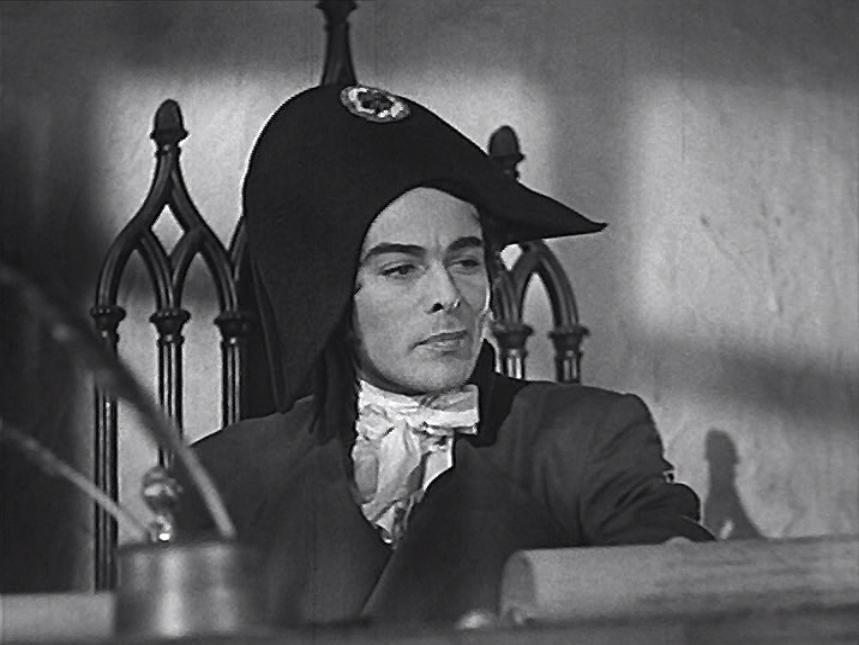
 Hugh Sinclair and Nils Asther in The Marriage of Corbal, 1936
Graham Greene writing in The Spectator 5 June 1936:
What is an English film? There are times when one cannot help brooding with acute distress on the cheap silly international pictures exported under that label. The Marriage of Corbal is a fairly harmless example. It is incredibly silly and incredibly badly written but there is a kind of wide-eyed innocence about this story of the French revolution which is almost endearing. But an English film? Is that a fair description of a picture derived from a novel by Rafael Sabatini, directed by Karl Grune and F Brunn, photographed by Otto Kanturek, and edited by E Stokvis [sic] with a cast which includes Nils Asther, Ernst Deutsch and the American, Noah Berry? The result is appalling... England, of course, has always been the home of the exiled; but one may at least express a wich that émigrés would set up trades in which their ignorance of our language and our culture was less of a handicap; it would not grieve me to see Mr Alexander Korda seated before a cottage loom in an Eastern country, following an older and a better tradition. The Quota Act has played into foreign hands, and as far as I know, there is nothing to prevent an English film unit being completely staffed by technicians of foreign blood. We have saved the British film industry from American competition only to surrender it to a far more alien control.


Nils Asther: to Graham Greene's eyes in 1936, a distressing alien in the British film industry


The Cinematograph Films Act (1927) was introduced to stem the flood of American films into British cinemas. This protective legislation obliged exhibitors to programme a certain percentage of home-produced film. Intended to encourage quality filmmaking, the actual result of the Act was a plethora of short, cheap, quickly shot supporting features - 'quota quickies' - derided by critics at the time as a disgrace to British cinema. In retrospect, it can be seen that the 'quickies' provided a valuable training ground for filmmakers, technicians and actors who would later go on to greater things in 'quality' British cinema (including such notable figures as Michael Powell and David Lean). New legislation was introduced in 1938.


Nils Asther sponsors this omelet

Nils Asther
'Bachelor Omelet'
Favorite Recipes of the Movie Stars, 1931

'The sponsor of this omelet is no longer a bachelor. But his wife, Vivian Duncan, decided that this recipe was too good to be lost so she passes it on to you.'


Sunday, 28 August 2011

picture of the day: amazing

Nils Asther by Clarence Sinclair Bull for MGM studios, probably c1927
I think I've posted this picture before but I don't care. It's amazing and timeless.


Picture of the day: suave 1940s

Nils Asther, signed photograph, probably from the 1940s 
when he returned to Hollywood after working in England for a few years

click the image to see it bigger